

Advisory Insights
Perspectives from the
Sectors We Serve.
Sectors We Serve.
A curated selection of commentary, regulatory updates, and technical insights from across the industries where Tigaline operates.
- Report
- 15 Jan 2026
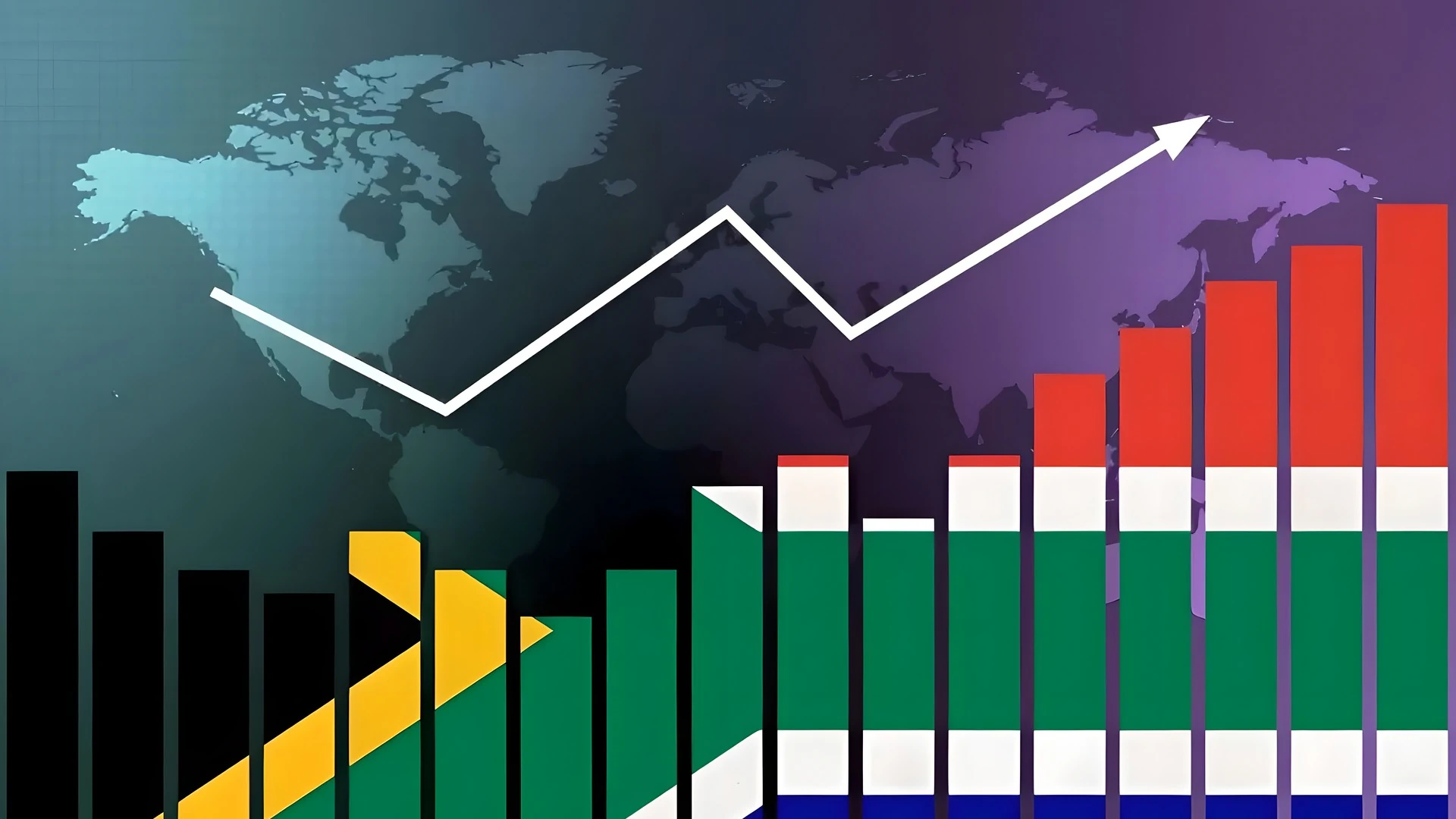
South Africa Dietry Supplements Market Size & Outlook, 2030 – Grand View Research
The South African dietary supplements market generated revenue of USD 1,260.0 million in 2024 and is projected to reach USD 2,110.3 million by 2030, growing at a compound annual growth rate of 9% over the forecast period.
Vitamins represent the largest segment by revenue, while proteins and amino acids are identified as the fastest-growing ingredient category. Key growth drivers include rising health and wellness awareness among South African consumers, growing demand among millennials, and increased government focus on educating the public about the benefits of dietary supplementation. Notably, South Africa's status as the country with the highest obesity rate in Sub-Saharan Africa has also attracted manufacturers and suppliers targeting health-conscious consumers in the market.
South Africa currently accounts for approximately 0.7% of the global dietary supplements market and is projected to lead the Middle East & Africa region in terms of revenue by 2030.
- Report
- 15 Jan 2026
South Africa Nutraceuticals Market Size & Share Analysis – Growth Trends and Forecast (2026–2031) | Mordor Intelligence
The South African nutraceuticals market is valued at USD 4.46 billion in 2025 and is projected to reach USD 5.82 billion by 2031, growing at a CAGR of 4.55%. Dietary supplements hold the largest product share at 44.45%, driven by widespread micronutrient deficiencies in the population, while functional beverages are the fastest-growing segment at 5.78% CAGR, buoyed by demand in the sports nutrition space.
Key growth drivers include an aging population increasingly seeking preventative health solutions, a rising incidence of lifestyle diseases such as obesity and diabetes, and a marked consumer shift toward natural and plant-based products. These trends are reinforced by government-led nutrition initiatives, including the Integrated Nutrition Programme and National Nutrition Week campaigns.
On the distribution side, supermarkets and hypermarkets dominate with a 31.05% share, while online retail is the fastest-growing channel at 6.08% CAGR, reflecting a digitally confident consumer base. The competitive landscape remains moderately fragmented, with both multinational players such as Nestlé and Cipla, and agile local brands, competing for market share.

- Report
- 02 Jan 2026
South Africa Cosmetics and Personal Care Products Market Size & Share Analysis – Growth Trends and Forecast (2026–2031) | Mordor Intelligence
The South African cosmetics and personal care products market is valued at USD 4.2 billion in 2026 and is projected to reach USD 5.58 billion by 2031, growing at a CAGR of 5.84%. Personal care products dominate with an 89.78% market share, while the cosmetics and make-up segment is forecast to grow at the fastest rate of 6.24% CAGR through 2031.
Mass-market products account for 85.62% of the market, reflecting the price-conscious nature of many South African consumers, though the premium segment is gaining momentum at a 6.69% CAGR, driven by rising disposable incomes, luxury retail expansion, and the influence of social media and beauty influencers. In terms of ingredients, conventional and synthetic formulations still dominate at 74.92% market share, but natural and organic alternatives are the fastest-growing category at 6.9% CAGR. Supermarkets and hypermarkets lead distribution with a 39.95% share, while online retail is advancing at an 8.01% CAGR - the fastest of any channel.
Key growth drivers include rising urbanisation, a growing men's grooming segment, increased e-commerce penetration, and shifting consumer preference toward cleaner, more sustainable formulations.

- Report
- 19 Nov 2025
Infrastructure Investing: Transforming A Price-takers Market
South Africa has bold ambitions to unlock over R1 trillion in infrastructure spend. If this is realised, this will translate into a series of transformative projects across energy, water, student housing, internet infrastructure and logistics hubs – the trick will be creating an enabling environment for investors to participate.

- Report
- 18 Nov 2025
South Africa Skincare Product Market Size & Share Analysis – Growth Trends and Forecast (2025–2030) | Mordor Intelligence
The South African skincare market is valued at USD 832.76 million in 2025 and is projected to reach USD 1.17 billion by 2030, growing at a CAGR of 7.06%. Facial care products dominate with a 79.23% revenue share, driven by growing consumer commitment to multi-step skincare routines, UV protection awareness, and a rising appetite for clinically-backed dermacosmetic formulations.
Women account for 88.78% of skincare spending, though the men's grooming segment is the fastest-growing end-user category at an 8.12% CAGR through 2030, supported by shifting attitudes toward male self-care and targeted influencer marketing. The mass segment holds a 66.28% share, while the luxury and premium segment is expanding at 7.97% CAGR, concentrated among affluent consumers in Gauteng and the Western Cape. Natural and organic formulations, while still a minority at 28.81% of the market, are growing at 7.89% CAGR, with local brands increasingly incorporating indigenous botanicals such as rooibos and marula oil. Online retail is the fastest-growing distribution channel at 8.04% CAGR, led by platforms like Takealot.com.

- Report
- 15 Mar 2024
The State of Railway Infrastructure in South Africa
South Africa’s rail network reflects stark contrasts in asset condition and operational resilience across freight, commuter, and rapid transit systems.
- Report
- 09 Jun 2025
Infrastructure Modernization for South Africa Development Policy Loan
World Bank Infrastructure Modernization Loan for South Africa
The World Bank has approved a US$1.5 billion Development Policy Loan (DPL) to support South Africa's critical infrastructure reforms. The financing targets the country's deepening economic crisis, where unemployment exceeds 31 percent and GDP growth has averaged below 1 percent over the past decade.
The operation focuses on three key pillars: improving energy security by attracting private investment into transmission and distribution; enhancing freight transport efficiency by establishing an independent economic regulator and unbundling state-owned Transnet; and supporting South Africa's transition to a low-carbon economy.
If successful, the reforms could boost short-term GDP growth by 1 percent and generate up to 250,000 jobs by 2027, rising to 500,000 by the early 2030s.

- Technical Note
- 14 May 2025
Amended National Treasury Regulation 16 for Public Private Partnerships (PPPs) versus Private Sector Participation (PSPs)
The amendments to Treasury Regulation 16 for Public Private Partnerships (PPPs) which comes into effect on 1 June 2025 represent a positive step towards revitalising the PPP landscape for institutions defined under the PFMA in South Africa. By streamlining approvals for smaller projects and providing a clearer framework for unsolicited proposals, the Government aims to attract greater private sector participation and investment in much-needed infrastructure within these institutions’ responsibilities.
However, certain challenges and areas for further attention remain. And the delayed finalisation of the municipal PPP regulations could create short-term inconsistencies and uncertainties for local government PPP initiatives.

- News Article
- 26 May 2025
Infrastructure SA preparing 34 projects to come to the market before end-2026
Infrastructure South Africa (ISA) is currently preparing and packaging 34 projects with an estimated capital value of R259-billion, says ISA acting head Mameetse Masemola, with these projects "hopefully coming to market" over the next 12 to 18 months.

- Report
- 12 Mar 2025
2025 Budget Review – Public-Sector Infrastructure and Public-Private Partnerships Update
Annexure D: Public-Sector Infrastructure and Public-Private Partnerships Update - 2025 Budget Review.
South Africa's public-sector infrastructure spending over the 2025 medium-term expenditure framework period is estimated at R1.03 trillion. State-owned companies remain the largest contributors to capital investment, with a projected R410.9 billion over the next three years, followed by provinces at R215.9 billion and municipalities at R200.8 billion.
To close the gap between available public resources and growing infrastructure needs, government is advancing a broad reform agenda - including amendments to the Public-Private Partnership regulatory framework, the strengthening of the Budget Facility for Infrastructure, and new blended finance initiatives aimed at crowding in private-sector investment. Since 2021, the Infrastructure Fund has helped package and finance 26 blended finance projects with a combined capital value of R101.6 billion, spanning water and sanitation, human settlements, student accommodation, transport, health, and energy.
The overarching goal is to shift both the quantity and quality of infrastructure delivery by mobilising private-sector financing and technical expertise at scale.

- Report
- 10 Feb 2025
The promise of private-public partnerships
Are we turning the corner on South Africa's infrastructure gap?
It is no secret that well-developed infrastructure is critical for economic growth and prosperity. Good roads, efficient ports, well-run rail networks as well as reliable electricity and water supply create an enabling environment in which businesses can thrive, create jobs, and grow the economy. Adequate infrastructure also allows governments to carry out efficient service delivery.

- Report
- 06 Feb 2025
State of Africa’s Infrastructure Report 2025
State of Africa's Infrastructure Report 2025 - Mobilising Domestic Capital.
Africa already holds over $1.1 trillion in domestic capital - from pension and insurance funds to public development banks and sovereign wealth funds. At a time when global capital is constrained and Africa's needs are urgent, this year's report makes the case that unlocking these internal resources is not just possible, but essential.
Across energy, transport, industry, and digital infrastructure, the continent faces both significant gaps and significant opportunity. In energy, Africa added just 6.5 GW of utility-scale capacity in 2024, compared to 48.6 GW in the United States - underscoring the need to urgently double or triple its annual buildout. In transport, a new wave of port privatisation and railway investment is gaining momentum, with projects like the Lobito Corridor unlocking mineral wealth and regional trade. Meanwhile, the arrival of ultra-modern subsea cables is opening new possibilities for digital connectivity, though rural access and affordability remain critical barriers.
The report's central message is clear: Africa's transformation will depend not only on attracting foreign capital, but on mobilising the vast resources already within its borders.
- Report
- 15 Mar 2024
The State of Railway Infrastructure in South Africa
South Africa’s rail network reflects stark contrasts in asset condition and operational resilience across freight, commuter, and rapid transit systems.
- Report
- 19 Nov 2025
Infrastructure Investing: Transforming A Price-takers Market
South Africa has bold ambitions to unlock over R1 trillion in infrastructure spend. If this is realised, this will translate into a series of transformative projects across energy, water, student housing, internet infrastructure and logistics hubs – the trick will be creating an enabling environment for investors to participate.
- News Article
- 27 May 2025
Infrastructure SA unveils its seven priority projects for 2025/2026
Infrastructure South Africa (ISA) has unveiled the seven projects it has selected under Bid Window 1 for priority project preparation.
- News Article
- 26 May 2025
Infrastructure SA preparing 34 projects to come to the market before end-2026
Infrastructure South Africa (ISA) is currently preparing and packaging 34 projects with an estimated capital value of R259-billion, says ISA acting head Mameetse Masemola, with these projects "hopefully coming to market" over the next 12 to 18 months.
- Report
- 12 Mar 2025
2025 Budget Review – Public-Sector Infrastructure and Public-Private Partnerships Update
Annexure D: Public-Sector Infrastructure and Public-Private Partnerships Update - 2025 Budget Review.
South Africa's public-sector infrastructure spending over the 2025 medium-term expenditure framework period is estimated at R1.03 trillion. State-owned companies remain the largest contributors to capital investment, with a projected R410.9 billion over the next three years, followed by provinces at R215.9 billion and municipalities at R200.8 billion.
To close the gap between available public resources and growing infrastructure needs, government is advancing a broad reform agenda - including amendments to the Public-Private Partnership regulatory framework, the strengthening of the Budget Facility for Infrastructure, and new blended finance initiatives aimed at crowding in private-sector investment. Since 2021, the Infrastructure Fund has helped package and finance 26 blended finance projects with a combined capital value of R101.6 billion, spanning water and sanitation, human settlements, student accommodation, transport, health, and energy.
The overarching goal is to shift both the quantity and quality of infrastructure delivery by mobilising private-sector financing and technical expertise at scale.
- Report
- 10 Feb 2025
The promise of private-public partnerships
Are we turning the corner on South Africa's infrastructure gap?
It is no secret that well-developed infrastructure is critical for economic growth and prosperity. Good roads, efficient ports, well-run rail networks as well as reliable electricity and water supply create an enabling environment in which businesses can thrive, create jobs, and grow the economy. Adequate infrastructure also allows governments to carry out efficient service delivery.
- Report
- 06 Feb 2025
State of Africa’s Infrastructure Report 2025
State of Africa's Infrastructure Report 2025 - Mobilising Domestic Capital.
Africa already holds over $1.1 trillion in domestic capital - from pension and insurance funds to public development banks and sovereign wealth funds. At a time when global capital is constrained and Africa's needs are urgent, this year's report makes the case that unlocking these internal resources is not just possible, but essential.
Across energy, transport, industry, and digital infrastructure, the continent faces both significant gaps and significant opportunity. In energy, Africa added just 6.5 GW of utility-scale capacity in 2024, compared to 48.6 GW in the United States - underscoring the need to urgently double or triple its annual buildout. In transport, a new wave of port privatisation and railway investment is gaining momentum, with projects like the Lobito Corridor unlocking mineral wealth and regional trade. Meanwhile, the arrival of ultra-modern subsea cables is opening new possibilities for digital connectivity, though rural access and affordability remain critical barriers.
The report's central message is clear: Africa's transformation will depend not only on attracting foreign capital, but on mobilising the vast resources already within its borders.
- Report
- 19 Nov 2025
Infrastructure Investing: Transforming A Price-takers Market
South Africa has bold ambitions to unlock over R1 trillion in infrastructure spend. If this is realised, this will translate into a series of transformative projects across energy, water, student housing, internet infrastructure and logistics hubs – the trick will be creating an enabling environment for investors to participate.
- News Article
- 27 May 2025
Infrastructure SA unveils its seven priority projects for 2025/2026
Infrastructure South Africa (ISA) has unveiled the seven projects it has selected under Bid Window 1 for priority project preparation.
- News Article
- 26 May 2025
Infrastructure SA preparing 34 projects to come to the market before end-2026
Infrastructure South Africa (ISA) is currently preparing and packaging 34 projects with an estimated capital value of R259-billion, says ISA acting head Mameetse Masemola, with these projects "hopefully coming to market" over the next 12 to 18 months.
- Report
- 12 Mar 2025
2025 Budget Review – Public-Sector Infrastructure and Public-Private Partnerships Update
Annexure D: Public-Sector Infrastructure and Public-Private Partnerships Update - 2025 Budget Review.
South Africa's public-sector infrastructure spending over the 2025 medium-term expenditure framework period is estimated at R1.03 trillion. State-owned companies remain the largest contributors to capital investment, with a projected R410.9 billion over the next three years, followed by provinces at R215.9 billion and municipalities at R200.8 billion.
To close the gap between available public resources and growing infrastructure needs, government is advancing a broad reform agenda - including amendments to the Public-Private Partnership regulatory framework, the strengthening of the Budget Facility for Infrastructure, and new blended finance initiatives aimed at crowding in private-sector investment. Since 2021, the Infrastructure Fund has helped package and finance 26 blended finance projects with a combined capital value of R101.6 billion, spanning water and sanitation, human settlements, student accommodation, transport, health, and energy.
The overarching goal is to shift both the quantity and quality of infrastructure delivery by mobilising private-sector financing and technical expertise at scale.
- Report
- 10 Feb 2025
The promise of private-public partnerships
Are we turning the corner on South Africa's infrastructure gap?
It is no secret that well-developed infrastructure is critical for economic growth and prosperity. Good roads, efficient ports, well-run rail networks as well as reliable electricity and water supply create an enabling environment in which businesses can thrive, create jobs, and grow the economy. Adequate infrastructure also allows governments to carry out efficient service delivery.
- Report
- 06 Feb 2025
State of Africa’s Infrastructure Report 2025
State of Africa's Infrastructure Report 2025 - Mobilising Domestic Capital.
Africa already holds over $1.1 trillion in domestic capital - from pension and insurance funds to public development banks and sovereign wealth funds. At a time when global capital is constrained and Africa's needs are urgent, this year's report makes the case that unlocking these internal resources is not just possible, but essential.
Across energy, transport, industry, and digital infrastructure, the continent faces both significant gaps and significant opportunity. In energy, Africa added just 6.5 GW of utility-scale capacity in 2024, compared to 48.6 GW in the United States - underscoring the need to urgently double or triple its annual buildout. In transport, a new wave of port privatisation and railway investment is gaining momentum, with projects like the Lobito Corridor unlocking mineral wealth and regional trade. Meanwhile, the arrival of ultra-modern subsea cables is opening new possibilities for digital connectivity, though rural access and affordability remain critical barriers.
The report's central message is clear: Africa's transformation will depend not only on attracting foreign capital, but on mobilising the vast resources already within its borders.
- Report
- 19 Nov 2025
Infrastructure Investing: Transforming A Price-takers Market
South Africa has bold ambitions to unlock over R1 trillion in infrastructure spend. If this is realised, this will translate into a series of transformative projects across energy, water, student housing, internet infrastructure and logistics hubs – the trick will be creating an enabling environment for investors to participate.
- News Article
- 27 May 2025
Infrastructure SA unveils its seven priority projects for 2025/2026
Infrastructure South Africa (ISA) has unveiled the seven projects it has selected under Bid Window 1 for priority project preparation.
- Report
- 12 Mar 2025
2025 Budget Review – Public-Sector Infrastructure and Public-Private Partnerships Update
Annexure D: Public-Sector Infrastructure and Public-Private Partnerships Update - 2025 Budget Review.
South Africa's public-sector infrastructure spending over the 2025 medium-term expenditure framework period is estimated at R1.03 trillion. State-owned companies remain the largest contributors to capital investment, with a projected R410.9 billion over the next three years, followed by provinces at R215.9 billion and municipalities at R200.8 billion.
To close the gap between available public resources and growing infrastructure needs, government is advancing a broad reform agenda - including amendments to the Public-Private Partnership regulatory framework, the strengthening of the Budget Facility for Infrastructure, and new blended finance initiatives aimed at crowding in private-sector investment. Since 2021, the Infrastructure Fund has helped package and finance 26 blended finance projects with a combined capital value of R101.6 billion, spanning water and sanitation, human settlements, student accommodation, transport, health, and energy.
The overarching goal is to shift both the quantity and quality of infrastructure delivery by mobilising private-sector financing and technical expertise at scale.
- Report
- 06 Feb 2025
State of Africa’s Infrastructure Report 2025
State of Africa's Infrastructure Report 2025 - Mobilising Domestic Capital.
Africa already holds over $1.1 trillion in domestic capital - from pension and insurance funds to public development banks and sovereign wealth funds. At a time when global capital is constrained and Africa's needs are urgent, this year's report makes the case that unlocking these internal resources is not just possible, but essential.
Across energy, transport, industry, and digital infrastructure, the continent faces both significant gaps and significant opportunity. In energy, Africa added just 6.5 GW of utility-scale capacity in 2024, compared to 48.6 GW in the United States - underscoring the need to urgently double or triple its annual buildout. In transport, a new wave of port privatisation and railway investment is gaining momentum, with projects like the Lobito Corridor unlocking mineral wealth and regional trade. Meanwhile, the arrival of ultra-modern subsea cables is opening new possibilities for digital connectivity, though rural access and affordability remain critical barriers.
The report's central message is clear: Africa's transformation will depend not only on attracting foreign capital, but on mobilising the vast resources already within its borders.

- LinkedIn Post
- 27 Jan 2026
SA Rugby & Biogen Partner Up
More than a sponsorship - this partnership with SA Rugby is built on shared values, trust, and a commitment to credible performance. An invitation to #UpYourStandards.

- Press Release
- 22 Jan 2026
Biogen joins SA Rugby partner family
SA Rugby announced on Thursday that Biogen has joined its family of partners after signing a three-year sponsorship agreement which sees the premium wellness brand landing the vitamins and sports nutrition partnership to the Springboks, Springbok Women, as well as the national sevens and U20 teams.

- Client Announcement
- 22 Jan 2026
BIOGEN JOINS SA RUGBY PARTNER FAMILY
SA Rugby announced on Thursday that Biogen has joined its family of partners after signing a three-year sponsorship agreement, which sees the premium wellness brand landing the vitamins and sports nutrition partnership to the Springboks, Springbok Women, as well as the national sevens and U20 teams.
- Report
- 15 Jan 2026
South Africa Dietry Supplements Market Size & Outlook, 2030 – Grand View Research
The South African dietary supplements market generated revenue of USD 1,260.0 million in 2024 and is projected to reach USD 2,110.3 million by 2030, growing at a compound annual growth rate of 9% over the forecast period.
Vitamins represent the largest segment by revenue, while proteins and amino acids are identified as the fastest-growing ingredient category. Key growth drivers include rising health and wellness awareness among South African consumers, growing demand among millennials, and increased government focus on educating the public about the benefits of dietary supplementation. Notably, South Africa's status as the country with the highest obesity rate in Sub-Saharan Africa has also attracted manufacturers and suppliers targeting health-conscious consumers in the market.
South Africa currently accounts for approximately 0.7% of the global dietary supplements market and is projected to lead the Middle East & Africa region in terms of revenue by 2030.
- Report
- 15 Jan 2026
South Africa Nutraceuticals Market Size & Share Analysis – Growth Trends and Forecast (2026–2031) | Mordor Intelligence
The South African nutraceuticals market is valued at USD 4.46 billion in 2025 and is projected to reach USD 5.82 billion by 2031, growing at a CAGR of 4.55%. Dietary supplements hold the largest product share at 44.45%, driven by widespread micronutrient deficiencies in the population, while functional beverages are the fastest-growing segment at 5.78% CAGR, buoyed by demand in the sports nutrition space.
Key growth drivers include an aging population increasingly seeking preventative health solutions, a rising incidence of lifestyle diseases such as obesity and diabetes, and a marked consumer shift toward natural and plant-based products. These trends are reinforced by government-led nutrition initiatives, including the Integrated Nutrition Programme and National Nutrition Week campaigns.
On the distribution side, supermarkets and hypermarkets dominate with a 31.05% share, while online retail is the fastest-growing channel at 6.08% CAGR, reflecting a digitally confident consumer base. The competitive landscape remains moderately fragmented, with both multinational players such as Nestlé and Cipla, and agile local brands, competing for market share.
- Report
- 02 Jan 2026
South Africa Cosmetics and Personal Care Products Market Size & Share Analysis – Growth Trends and Forecast (2026–2031) | Mordor Intelligence
The South African cosmetics and personal care products market is valued at USD 4.2 billion in 2026 and is projected to reach USD 5.58 billion by 2031, growing at a CAGR of 5.84%. Personal care products dominate with an 89.78% market share, while the cosmetics and make-up segment is forecast to grow at the fastest rate of 6.24% CAGR through 2031.
Mass-market products account for 85.62% of the market, reflecting the price-conscious nature of many South African consumers, though the premium segment is gaining momentum at a 6.69% CAGR, driven by rising disposable incomes, luxury retail expansion, and the influence of social media and beauty influencers. In terms of ingredients, conventional and synthetic formulations still dominate at 74.92% market share, but natural and organic alternatives are the fastest-growing category at 6.9% CAGR. Supermarkets and hypermarkets lead distribution with a 39.95% share, while online retail is advancing at an 8.01% CAGR - the fastest of any channel.
Key growth drivers include rising urbanisation, a growing men's grooming segment, increased e-commerce penetration, and shifting consumer preference toward cleaner, more sustainable formulations.

- Technical Note
- 17 Jan 2025
South Africa Clinical Research Regulation Profile – NIAID ClinRegs
Maintained by the US National Institute of Allergy and Infectious Diseases (NIAID), this profile provides a comprehensive overview of the regulatory and ethical framework governing clinical trials in South Africa. The South African Health Products Regulatory Authority (SAHPRA) serves as the primary regulatory body, responsible for reviewing and approving all clinical trial applications, overseeing Good Manufacturing Practice compliance, and authorising the importation of unregistered medicines for trial purposes.
All clinical trials must receive dual approval from both SAHPRA and a registered Ethics Committee (EC) before commencing, with parallel review permitted. ECs are governed by the National Health Research Ethics Council (NHREC) and must be formally registered to conduct ethical reviews. The profile covers the full clinical trial lifecycle, including submission processes and content requirements, safety and progress reporting obligations, informed consent requirements for vulnerable populations, investigational product management, and specimen import and export rules.

- Technical Note
- 29 Oct 2025
SAHPRA’s New Guidelines for Labelling of Medicines Intended for Human Use
This guideline, issued by the South African Health Products Regulatory Authority (SAHPRA), provides recommendations to applicants submitting registration applications for human medicines (Categories A and D). It aims to ensure consistency and accuracy in medicine labelling in line with the Medicines and Related Substances Act, 1965.
At minimum, proposed labels must comply with Regulation 10 of the Act, specify sugar quantity per unit dose, include instructions for use on outer packaging, and indicate the medicine's category and classification. Applicants are also required to submit full-colour mock-ups of both outer and immediate packaging in electronic format, with different colours strongly recommended to distinguish between different strengths.
The label content, once approved, may not be changed without SAHPRA's explicit authorisation. This guideline is valid for five years from its effective date.
- Technical Note
- 29 Sep 2025
SAHPRA Communication to Stakeholders: Traceability Guideline – Implementation Roadmap
SAHPRA has issued a phased implementation roadmap for unique product identification across all health products in South Africa, transitioning from batch-level tracking to full unit-level serialisation. The process is structured in two phases: Phase 1 (2025–2029) focuses on batch-level identification using GTINs, expiry dates, and batch numbers, while Phase 2 (2027–2031) introduces unique serial numbers to achieve complete product serialisation across primary, secondary, and tertiary packaging.
Imported products face earlier compliance deadlines than domestically manufactured ones, with batch-level requirements taking effect from October 2027 for imports and October 2029 for local products. All barcodes must meet GS1 technical standards, and manufacturers are required to maintain unique identifier records for five years after product expiry. Excluded from these requirements are whole blood, homeopathic medicines, extemporaneous preparations, and food and related supplements.
- Report
- 15 Jan 2026
South Africa Dietry Supplements Market Size & Outlook, 2030 – Grand View Research
The South African dietary supplements market generated revenue of USD 1,260.0 million in 2024 and is projected to reach USD 2,110.3 million by 2030, growing at a compound annual growth rate of 9% over the forecast period.
Vitamins represent the largest segment by revenue, while proteins and amino acids are identified as the fastest-growing ingredient category. Key growth drivers include rising health and wellness awareness among South African consumers, growing demand among millennials, and increased government focus on educating the public about the benefits of dietary supplementation. Notably, South Africa's status as the country with the highest obesity rate in Sub-Saharan Africa has also attracted manufacturers and suppliers targeting health-conscious consumers in the market.
South Africa currently accounts for approximately 0.7% of the global dietary supplements market and is projected to lead the Middle East & Africa region in terms of revenue by 2030.
- Report
- 15 Jan 2026
South Africa Nutraceuticals Market Size & Share Analysis – Growth Trends and Forecast (2026–2031) | Mordor Intelligence
The South African nutraceuticals market is valued at USD 4.46 billion in 2025 and is projected to reach USD 5.82 billion by 2031, growing at a CAGR of 4.55%. Dietary supplements hold the largest product share at 44.45%, driven by widespread micronutrient deficiencies in the population, while functional beverages are the fastest-growing segment at 5.78% CAGR, buoyed by demand in the sports nutrition space.
Key growth drivers include an aging population increasingly seeking preventative health solutions, a rising incidence of lifestyle diseases such as obesity and diabetes, and a marked consumer shift toward natural and plant-based products. These trends are reinforced by government-led nutrition initiatives, including the Integrated Nutrition Programme and National Nutrition Week campaigns.
On the distribution side, supermarkets and hypermarkets dominate with a 31.05% share, while online retail is the fastest-growing channel at 6.08% CAGR, reflecting a digitally confident consumer base. The competitive landscape remains moderately fragmented, with both multinational players such as Nestlé and Cipla, and agile local brands, competing for market share.
- Technical Note
- 29 Oct 2025
SAHPRA’s New Guidelines for Labelling of Medicines Intended for Human Use
This guideline, issued by the South African Health Products Regulatory Authority (SAHPRA), provides recommendations to applicants submitting registration applications for human medicines (Categories A and D). It aims to ensure consistency and accuracy in medicine labelling in line with the Medicines and Related Substances Act, 1965.
At minimum, proposed labels must comply with Regulation 10 of the Act, specify sugar quantity per unit dose, include instructions for use on outer packaging, and indicate the medicine's category and classification. Applicants are also required to submit full-colour mock-ups of both outer and immediate packaging in electronic format, with different colours strongly recommended to distinguish between different strengths.
The label content, once approved, may not be changed without SAHPRA's explicit authorisation. This guideline is valid for five years from its effective date.
- Technical Note
- 29 Sep 2025
SAHPRA Communication to Stakeholders: Traceability Guideline – Implementation Roadmap
SAHPRA has issued a phased implementation roadmap for unique product identification across all health products in South Africa, transitioning from batch-level tracking to full unit-level serialisation. The process is structured in two phases: Phase 1 (2025–2029) focuses on batch-level identification using GTINs, expiry dates, and batch numbers, while Phase 2 (2027–2031) introduces unique serial numbers to achieve complete product serialisation across primary, secondary, and tertiary packaging.
Imported products face earlier compliance deadlines than domestically manufactured ones, with batch-level requirements taking effect from October 2027 for imports and October 2029 for local products. All barcodes must meet GS1 technical standards, and manufacturers are required to maintain unique identifier records for five years after product expiry. Excluded from these requirements are whole blood, homeopathic medicines, extemporaneous preparations, and food and related supplements.
- LinkedIn Post
- 27 Jan 2026
SA Rugby & Biogen Partner Up
More than a sponsorship - this partnership with SA Rugby is built on shared values, trust, and a commitment to credible performance. An invitation to #UpYourStandards.
- Client Announcement
- 22 Jan 2026
BIOGEN JOINS SA RUGBY PARTNER FAMILY
SA Rugby announced on Thursday that Biogen has joined its family of partners after signing a three-year sponsorship agreement, which sees the premium wellness brand landing the vitamins and sports nutrition partnership to the Springboks, Springbok Women, as well as the national sevens and U20 teams.
- Press Release
- 22 Jan 2026
Biogen joins SA Rugby partner family
SA Rugby announced on Thursday that Biogen has joined its family of partners after signing a three-year sponsorship agreement which sees the premium wellness brand landing the vitamins and sports nutrition partnership to the Springboks, Springbok Women, as well as the national sevens and U20 teams.
- Report
- 15 Jan 2026
South Africa Dietry Supplements Market Size & Outlook, 2030 – Grand View Research
The South African dietary supplements market generated revenue of USD 1,260.0 million in 2024 and is projected to reach USD 2,110.3 million by 2030, growing at a compound annual growth rate of 9% over the forecast period.
Vitamins represent the largest segment by revenue, while proteins and amino acids are identified as the fastest-growing ingredient category. Key growth drivers include rising health and wellness awareness among South African consumers, growing demand among millennials, and increased government focus on educating the public about the benefits of dietary supplementation. Notably, South Africa's status as the country with the highest obesity rate in Sub-Saharan Africa has also attracted manufacturers and suppliers targeting health-conscious consumers in the market.
South Africa currently accounts for approximately 0.7% of the global dietary supplements market and is projected to lead the Middle East & Africa region in terms of revenue by 2030.
- Report
- 15 Jan 2026
South Africa Nutraceuticals Market Size & Share Analysis – Growth Trends and Forecast (2026–2031) | Mordor Intelligence
The South African nutraceuticals market is valued at USD 4.46 billion in 2025 and is projected to reach USD 5.82 billion by 2031, growing at a CAGR of 4.55%. Dietary supplements hold the largest product share at 44.45%, driven by widespread micronutrient deficiencies in the population, while functional beverages are the fastest-growing segment at 5.78% CAGR, buoyed by demand in the sports nutrition space.
Key growth drivers include an aging population increasingly seeking preventative health solutions, a rising incidence of lifestyle diseases such as obesity and diabetes, and a marked consumer shift toward natural and plant-based products. These trends are reinforced by government-led nutrition initiatives, including the Integrated Nutrition Programme and National Nutrition Week campaigns.
On the distribution side, supermarkets and hypermarkets dominate with a 31.05% share, while online retail is the fastest-growing channel at 6.08% CAGR, reflecting a digitally confident consumer base. The competitive landscape remains moderately fragmented, with both multinational players such as Nestlé and Cipla, and agile local brands, competing for market share.
- Report
- 02 Jan 2026
South Africa Cosmetics and Personal Care Products Market Size & Share Analysis – Growth Trends and Forecast (2026–2031) | Mordor Intelligence
The South African cosmetics and personal care products market is valued at USD 4.2 billion in 2026 and is projected to reach USD 5.58 billion by 2031, growing at a CAGR of 5.84%. Personal care products dominate with an 89.78% market share, while the cosmetics and make-up segment is forecast to grow at the fastest rate of 6.24% CAGR through 2031.
Mass-market products account for 85.62% of the market, reflecting the price-conscious nature of many South African consumers, though the premium segment is gaining momentum at a 6.69% CAGR, driven by rising disposable incomes, luxury retail expansion, and the influence of social media and beauty influencers. In terms of ingredients, conventional and synthetic formulations still dominate at 74.92% market share, but natural and organic alternatives are the fastest-growing category at 6.9% CAGR. Supermarkets and hypermarkets lead distribution with a 39.95% share, while online retail is advancing at an 8.01% CAGR - the fastest of any channel.
Key growth drivers include rising urbanisation, a growing men's grooming segment, increased e-commerce penetration, and shifting consumer preference toward cleaner, more sustainable formulations.
- Report
- 18 Nov 2025
South Africa Skincare Product Market Size & Share Analysis – Growth Trends and Forecast (2025–2030) | Mordor Intelligence
The South African skincare market is valued at USD 832.76 million in 2025 and is projected to reach USD 1.17 billion by 2030, growing at a CAGR of 7.06%. Facial care products dominate with a 79.23% revenue share, driven by growing consumer commitment to multi-step skincare routines, UV protection awareness, and a rising appetite for clinically-backed dermacosmetic formulations.
Women account for 88.78% of skincare spending, though the men's grooming segment is the fastest-growing end-user category at an 8.12% CAGR through 2030, supported by shifting attitudes toward male self-care and targeted influencer marketing. The mass segment holds a 66.28% share, while the luxury and premium segment is expanding at 7.97% CAGR, concentrated among affluent consumers in Gauteng and the Western Cape. Natural and organic formulations, while still a minority at 28.81% of the market, are growing at 7.89% CAGR, with local brands increasingly incorporating indigenous botanicals such as rooibos and marula oil. Online retail is the fastest-growing distribution channel at 8.04% CAGR, led by platforms like Takealot.com.
BIOGEN JOINS SA RUGBY PARTNER FAMILY